PortSwigger SQL Injection Lab 8 — Finding a Column That Accepts Strings
A writeup of PortSwigger's SQL injection lab for identifying the column that can display string data in a UNION query.
Introduction
This is the eighth SQLi lab titled Finding a Column That Accepts Strings.
What we will try to do in this lab is a UNION attack to determine the number of columns returned by the first SELECT statement and which column has the string type.
Recon
We are faced with the usual e-commerce website by PortSwigger, as shown in the following image.
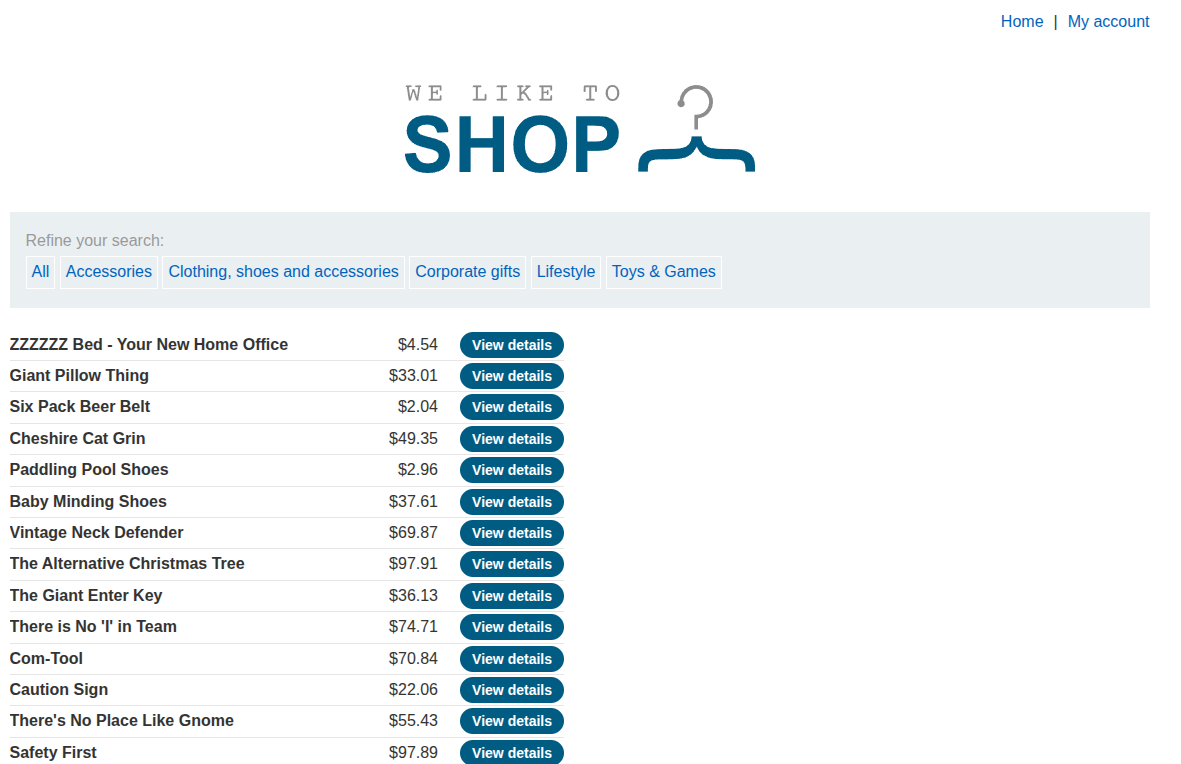
If we select a specific category, we get redirected to the URL /filter?category=Accessories.
Vuln Detection and Analysis
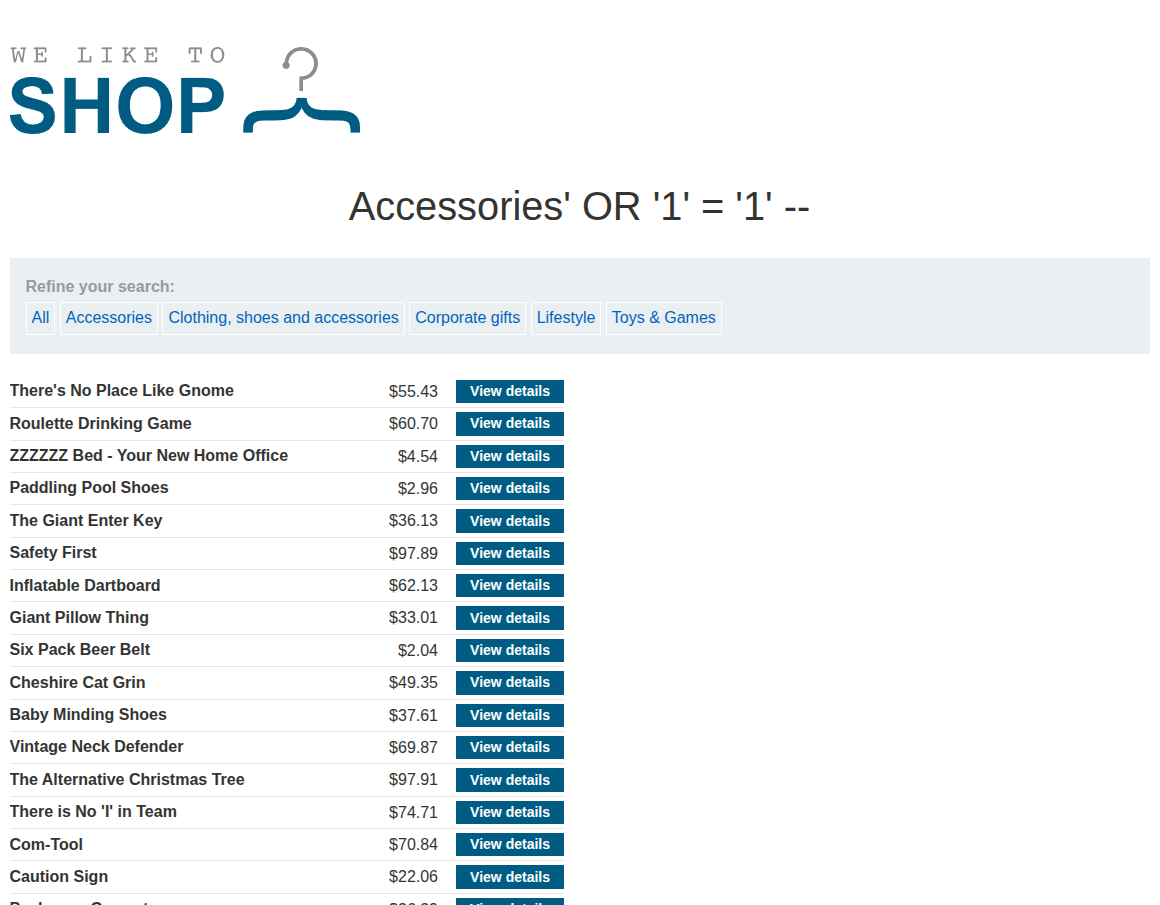
If we try to add the payload ' OR '1'='1' -- , we get all the items regardless of their category, which means that this is vulnerable to SQL injection.
Payload and Exploitation
First, we need to determine how many columns are being returned by the query that selects the category. We will add ' UNION SELECT NULL -- and keep adding NULL columns until no internal server error is shown.
If we inject ' UNION SELECT NULL,NULL,NULL -- , the error disappears and everything seems fine, as shown in the following image.
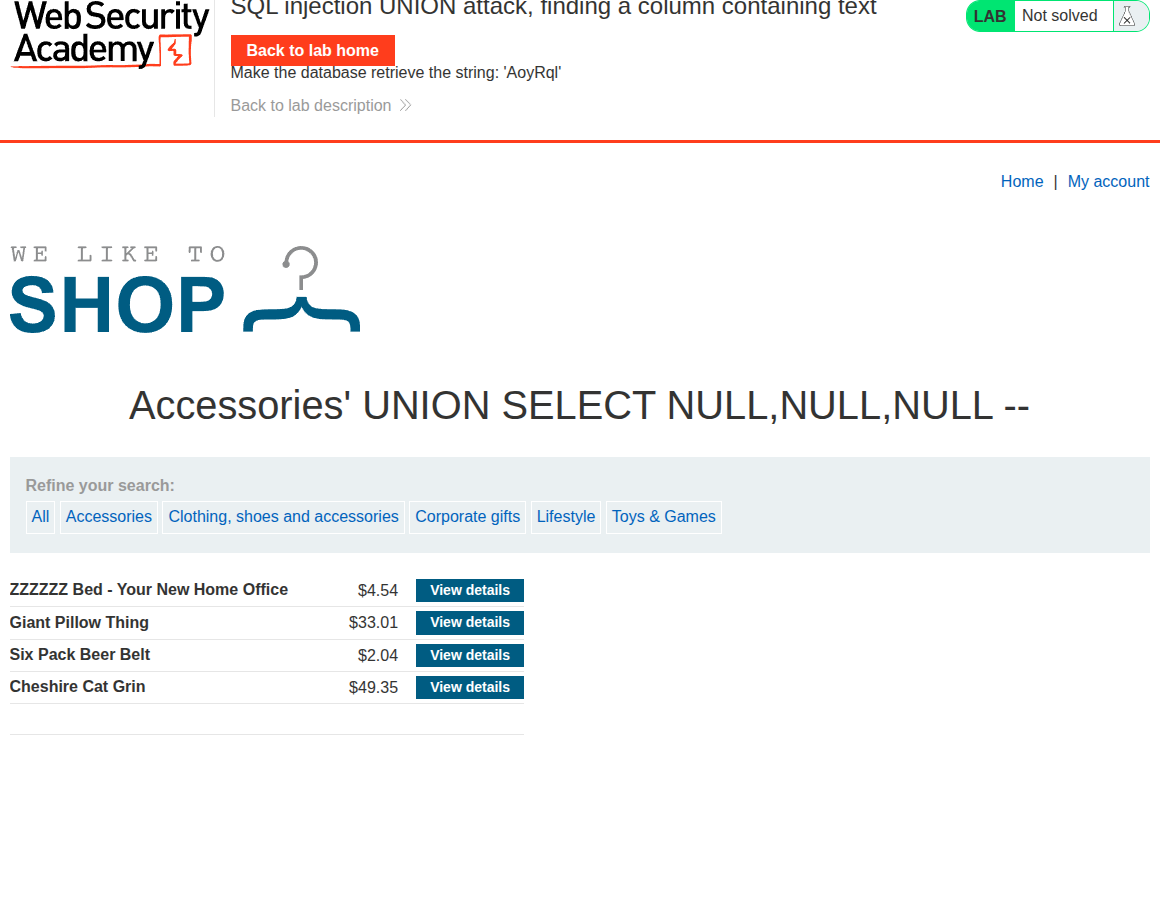
The string that we need to select is 'AoyRql'. So let’s now determine which column accepts a string type.
Since we always mention this in almost every SQLi lab, the UNION clause requires two conditions:
- Each
SELECTstatement should have the same number of columns. - Each column with the same index should have compatible types.
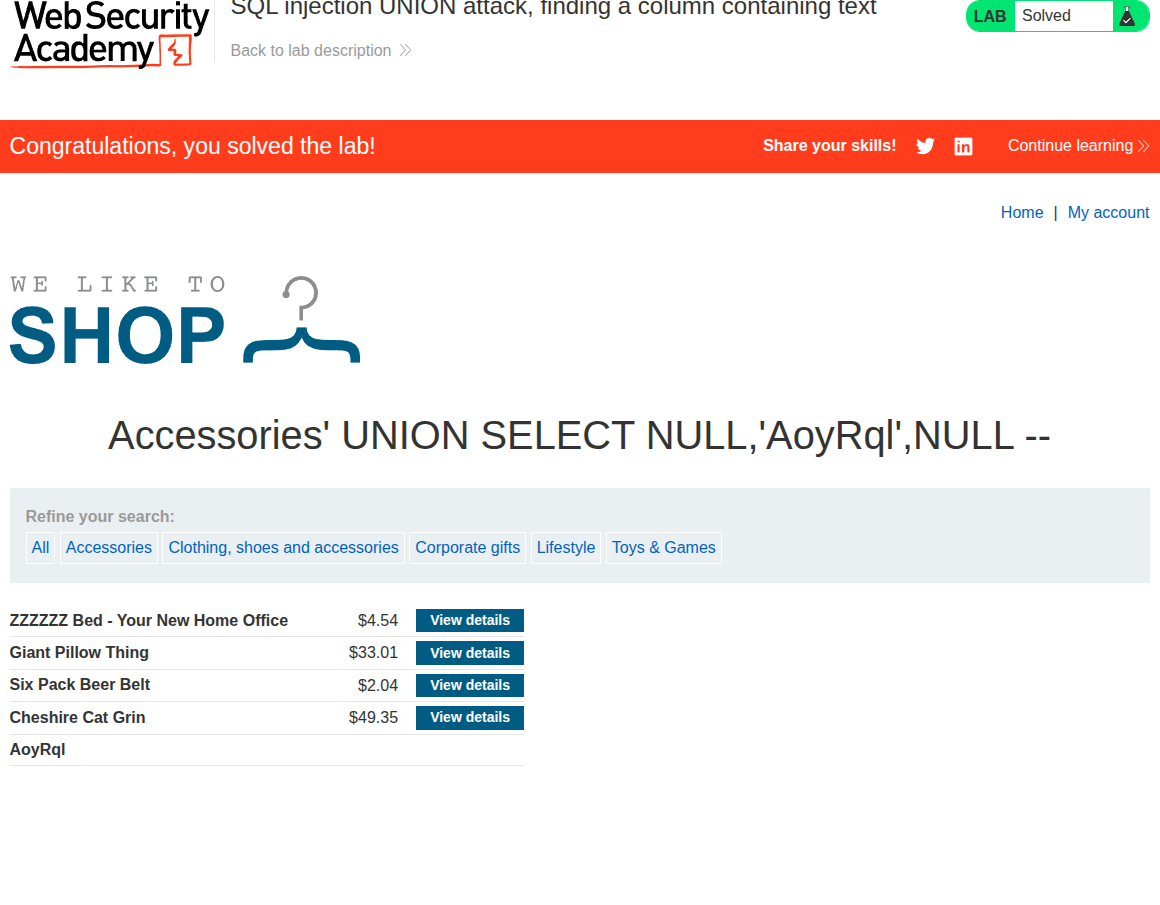
So we try ' UNION SELECT 'AoyRql',NULL,NULL -- . It did not work and gave us an internal server error. If we try ' UNION SELECT NULL,'AoyRql',NULL -- , it is correct, and the lab is solved. Therefore, the second column is of the string type.
Conclusion
That was a relatively easy lab. All the previous labs were for understanding UNION attacks more and how they work in general. The most important aspect is the two conditions that I mention in almost every post.